Pebble Ascent Tracker
Overview
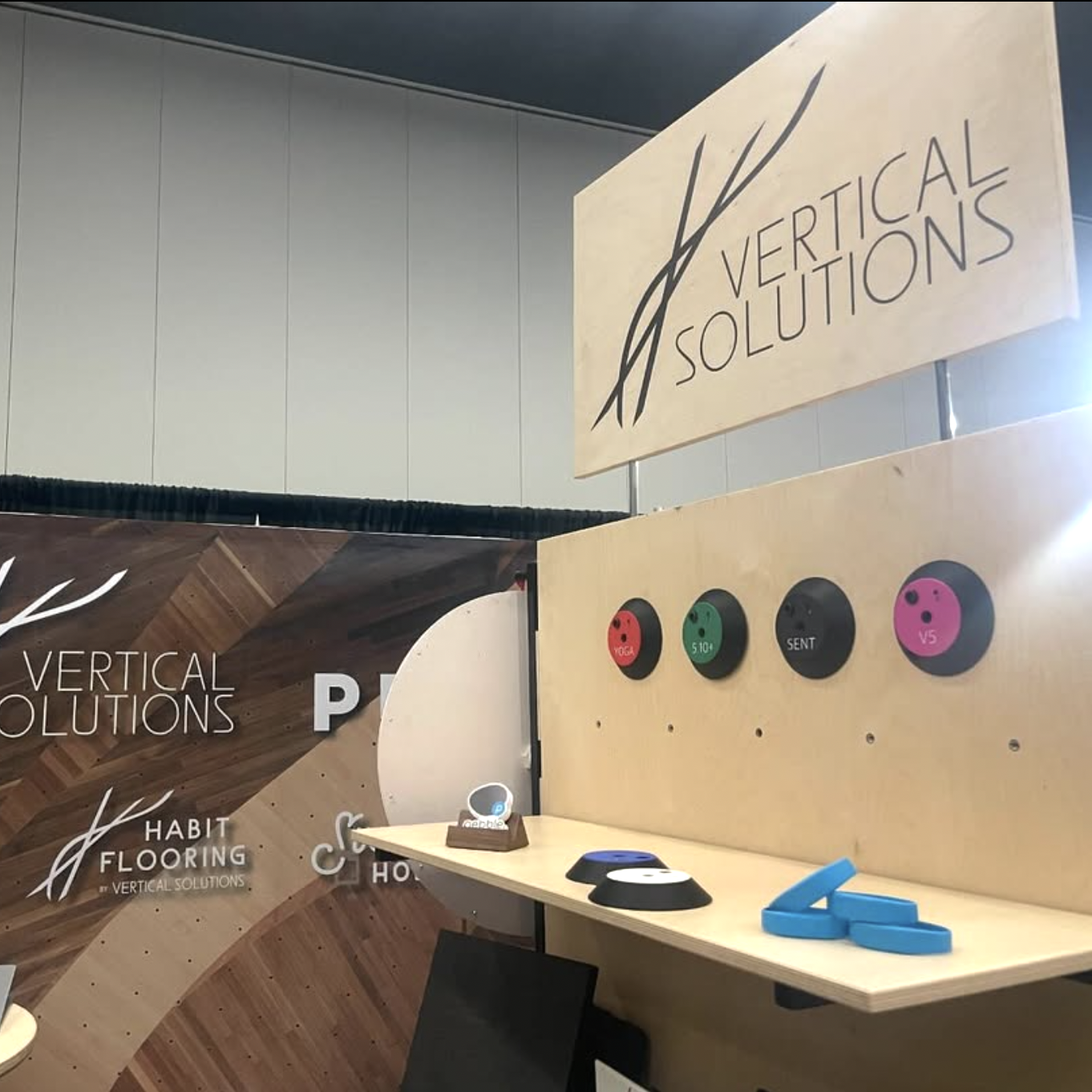
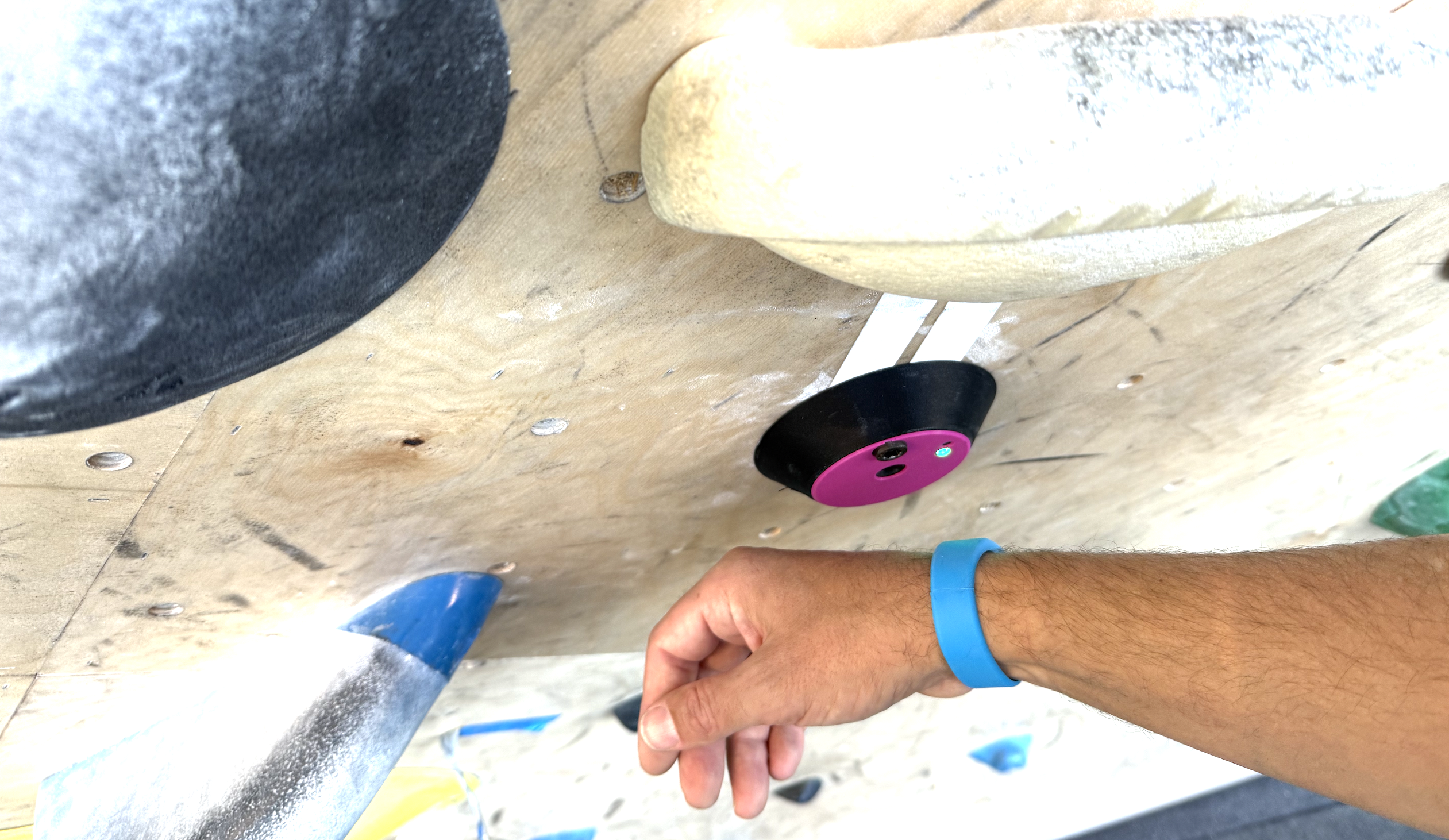
A patented custom IoT device that lets gym members log climbs by tapping an RFID wristband. The device is battery powered and uses LoRaWAN to send ascent data to the Pebble backend, allowing for phone-free ascent logging.
Technical Details
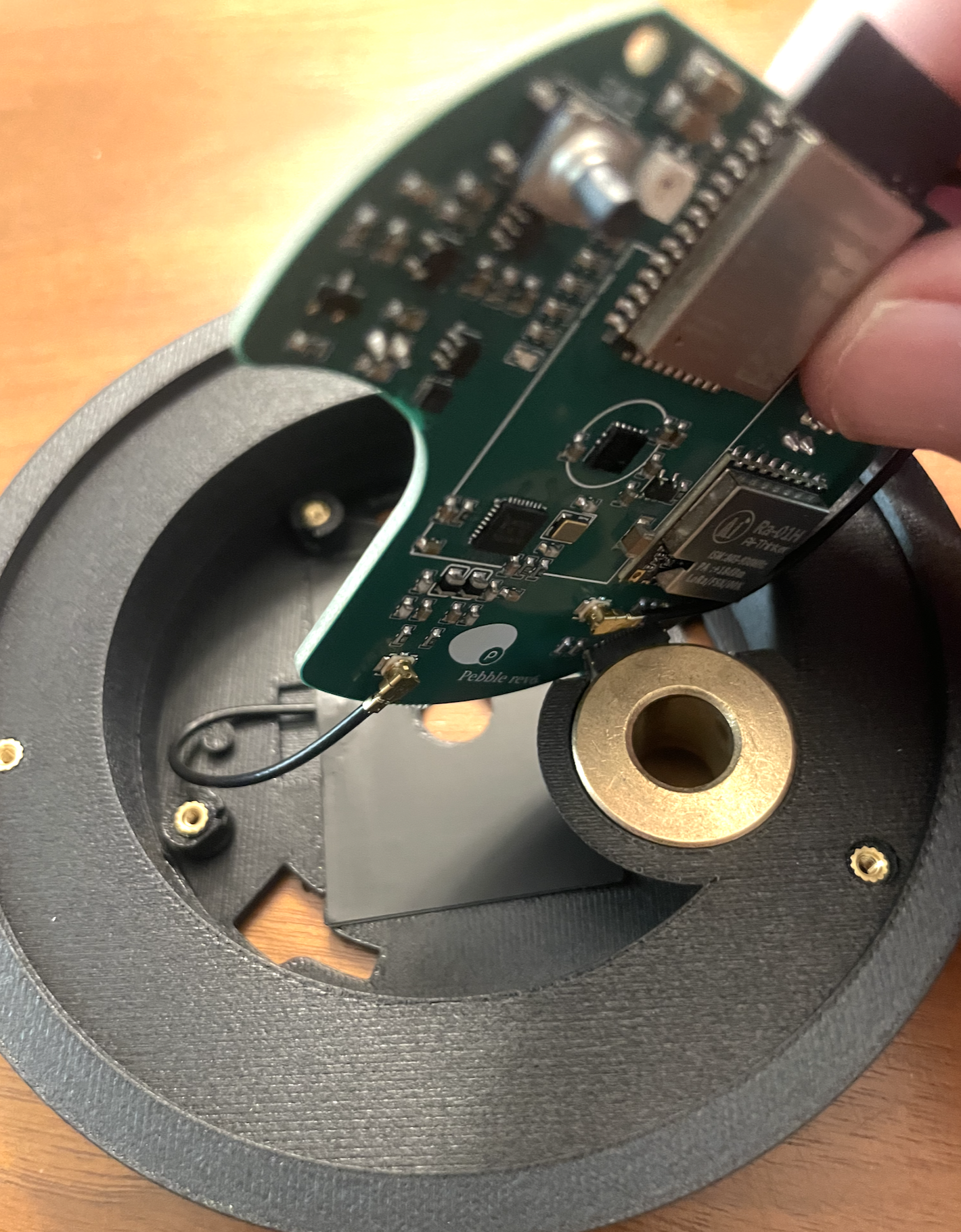
- Custom hardware built on ESP32 with LoRaWAN connectivity
- RFID reader for wristband-based identification
- Data pipeline to AWS IoT Core for real-time ingestion
- Integrated with the Pebble backend to attribute ascents to user accounts
- Patented design
Motivation
After building Pebble, we noticed that many climbers preferred to stay off their phones while at the gym. The climbing space is a place to disconnect, and we wanted to respect that. We explored wearables, but the cost to the end user was a barrier. That led to a key insight: what if we flipped the model entirely? Instead of a smart device on the wrist, we could put the complexity on the wall and give climbers a simple RFID wristband. Just tap and climb.
Results
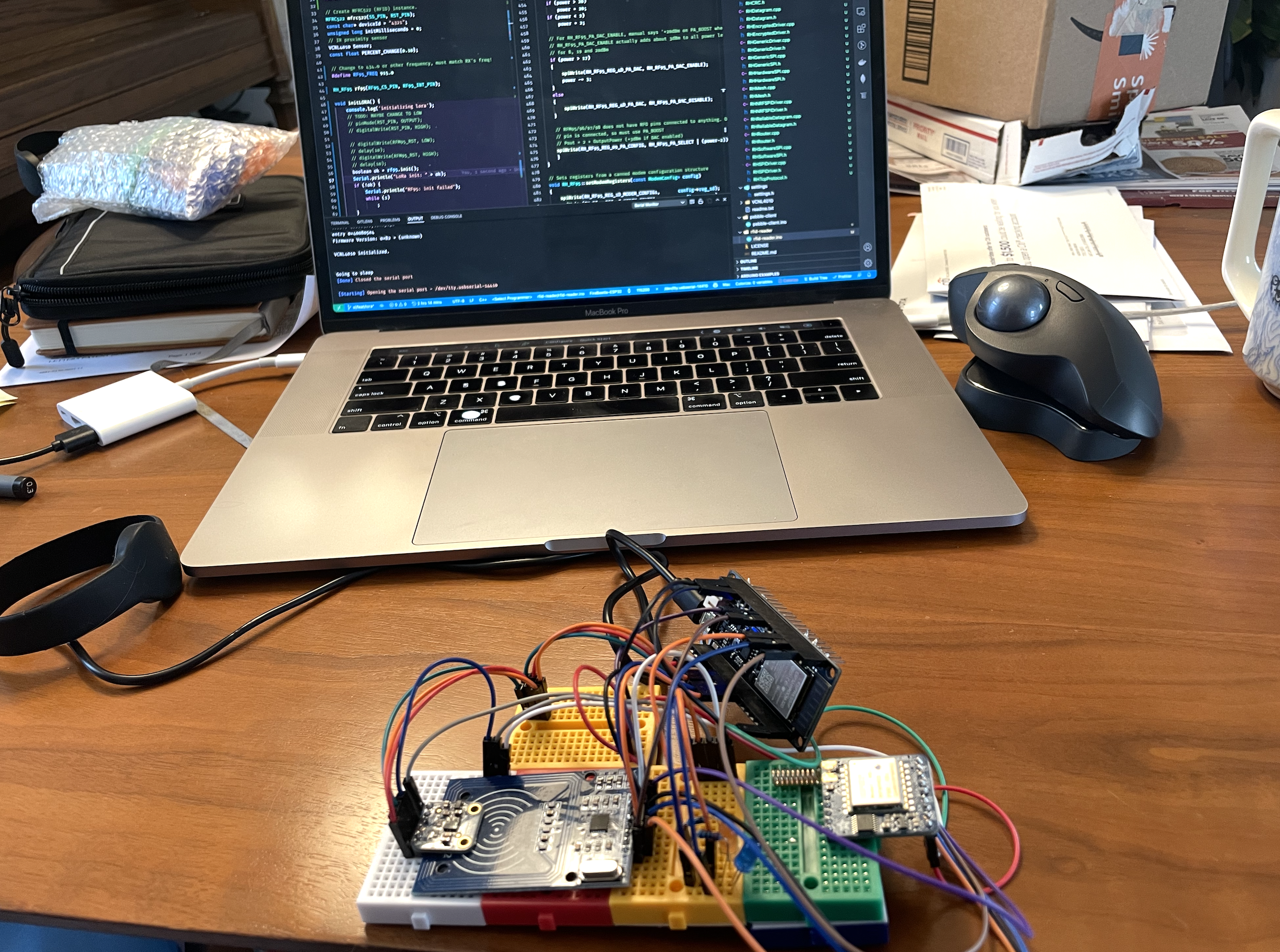
As a software engineer venturing into hardware for the first time, this project was a crash course in PCB design, manufacturing, and IoT at scale. I managed the full process — sourcing PCB designers, iterating on prototypes, and ultimately manufacturing a run of 400 units. The devices worked reliably the vast majority of the time, but a small percentage would intermittently go silent. After months of debugging, I eventually found the root cause by uploading the design files to an LLM for analysis — an early and practical use of AI-assisted hardware debugging. The fix turned out to be two pull-down resistors preventing a corrupted state. It was a great lesson in how subtle hardware issues can be compared to software, and in leveraging new tools to solve old problems.
Lessons Learned
The biggest takeaway wasn't technical, it was about user behavior. Even with working devices, we discovered that climbers didn't want to visibly tap a scanner on the wall. Unlike something like Strava, where tracking happens discreetly in the background, our scanner made the act of logging conspicuous. It felt performative in a culture that values understatement. This was a valuable lesson in product design: solving a technical problem isn't enough if the solution creates a social friction point. Understanding how people feel using your product matters just as much as how well it works.