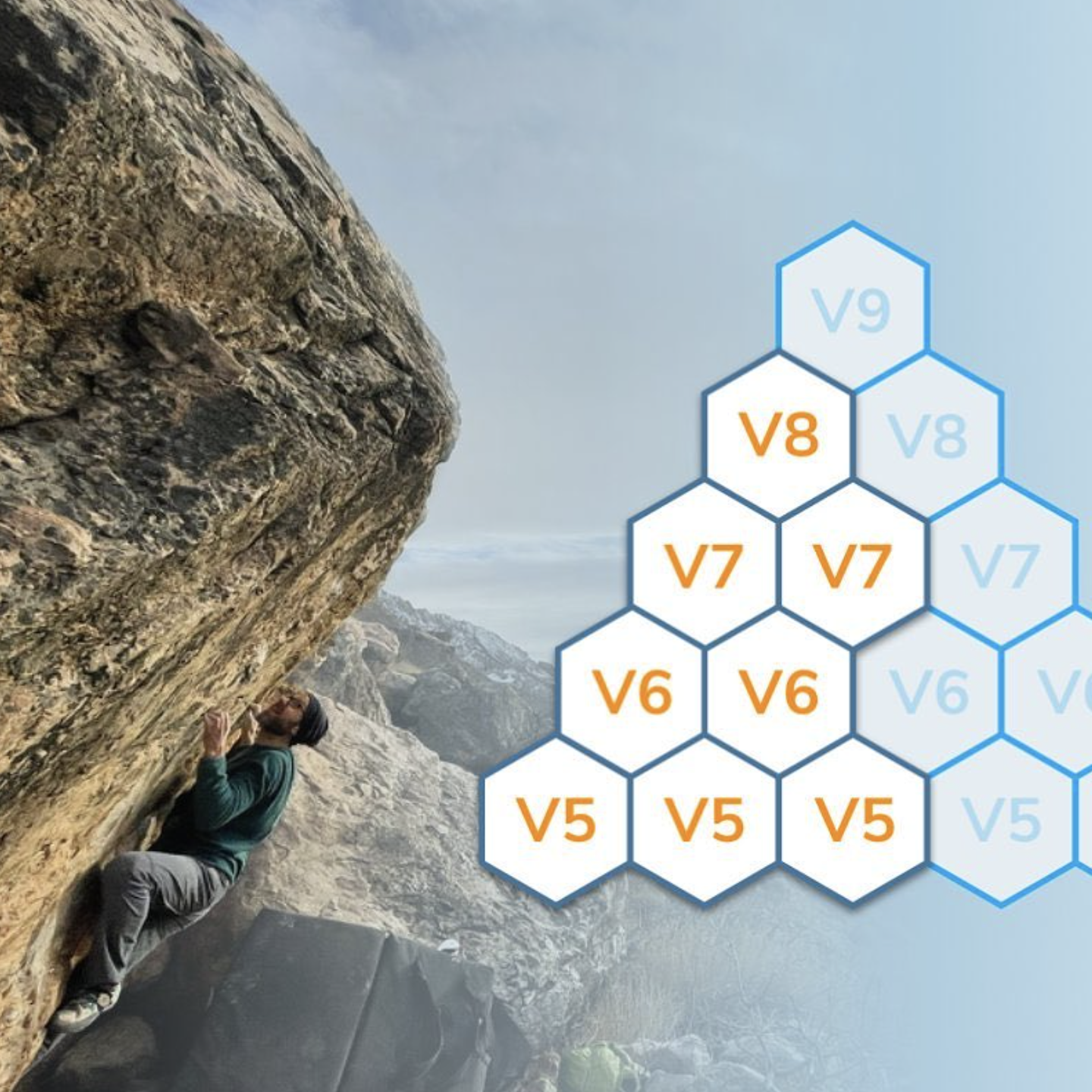
Gamification
Working on a consumer app for almost a decade has given me an intimate view of what motivates users. Most of the following is focused on fitness apps, since that's what I have experience with, but it could apply to other apps if there is an inherent behavior you're trying to encourage.
Base Users
With most any app, as long as it's providing some value, you'll get a certain percentage of users who are just naturally motivated to use it. They don't need any extra incentives or encouragement. They find the app useful or enjoyable enough on its own that they keep coming back. With fitness apps, they tend to be the ones that have already been tracking their workouts and goals in a spreadsheet. They'll use your app in its simplest form. But, these are only a small percentage of what you should be aiming for.
Badges and Points
Badges and points are the most common form of gamification, and they can be effective for some users. You can use these to drive specific behaviors, like trying out a new feature. But, they're pretty superficial and a lot of users will just ignore them. They're also not very sticky. Once you earn a badge, there's no reason to keep engaging with it.
Streaks
Streaks are a bit more effective, especially for fitness apps. They create a sense of loss aversion, where users don't want to break their streak. They'll grab another share of your user base, the ones that are motivated by consistency and habit. But, they can also be pretty fragile. If a user misses a day, they might just give up on the streak altogether.
Inherent Games
Some sports are inherently games. Golf, for example, is a game. There's a clear objective, finish 18 holes in the least amount of strokes. But, other sports, like running or rock climbing don't have an inherent start or end. Often, apps will give users some structure, like a training plan, but there's no real game there. They're just following instructions.
Let's Play a Game
The real opportunity is to create a game around the behavior you're trying to encourage, ideally with some strategy involved, at the bare minimum some sort of user choice.
Push vs Pull
The modern web shoves everything down your throat. Earlier, 15-20 years ago, there was an argument for pulling the user in. Navigation could be funky, sometimes you had to work to figure out what was going on. Push definitely won in the end, especially when looking at apps like Instagram and TikTok.
But, I think there's a slow move away from push and apps are starting to ask the user to explore a bit. Games are ideal for this. There's a reward, but it's going to take some effort.
Outside & 3rd Spaces
Everyone is tired of screens. The next frontier of gamification is going to be outside of the app, in the real world. Apps can create games that encourage users to go outside, explore their city, or even just move around more. This is especially relevant for fitness apps, but could apply to other types of apps as well. The key is to create a game that is fun and rewarding enough that users want to play it, even if it means they have to put down their phone to actually engage.
Show Me the Money
Tangible rewards are the most powerful form of gamification. If users can earn real money or prizes, they're going to be much more motivated to engage with the app. I've seen this first hand where Pebble users were getting gym store credit for completing certain games in the app. But, this only works in a B2B2C model or with some serious advertising connections. It's hard to pull off in a pure B2C model, unless you're asking the user's to put something on the line.
Case Studies
Pebble Pyramids
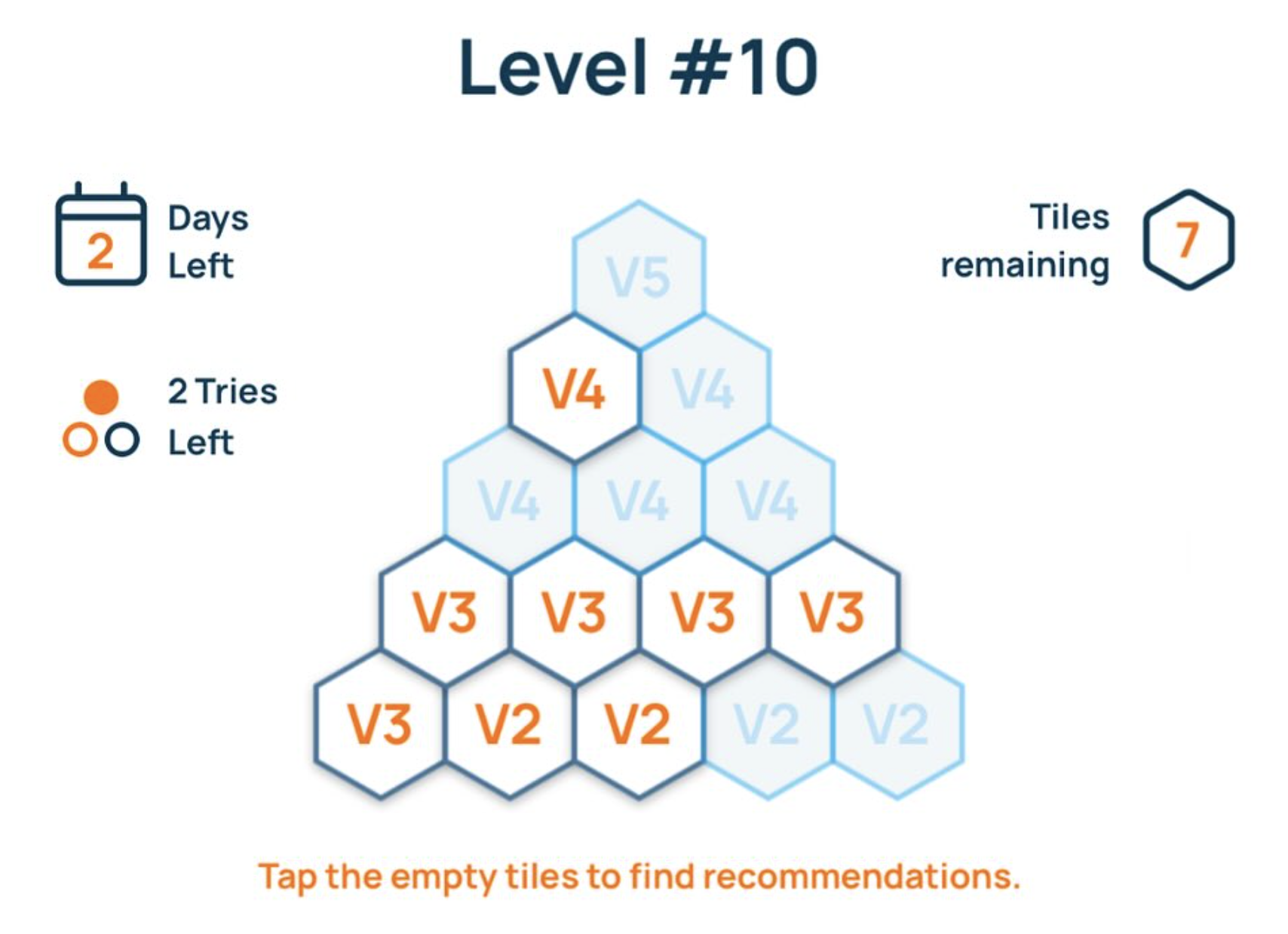
Most climbing training publications talk about a pyramid of your hardest sends. The top of the pyramid is your hardest send, and then you have a few sends that are slightly easier, and then more sends that are even easier. The idea is that you need a solid base of easier sends in order to be in shape to send your hardest project. We built a game around this concept in Pebble, where users were given a pyramid to fill out each week. They had to log ascents of different difficulties in order to fill out the pyramid and earn rewards. It was a fun way to encourage users to climb a variety of routes and not just focus on their hardest project.
For a few gyms we were able to incorporate a real world reward, where users could earn get $5 in credit for filling out their pyramid.
Pebble Hive
Click to the next slide in the instagram post below to see a video of Hive in action.
I added a multiplayer game to Pebble called Hive. Users could create games for their friends to play against each other. The game was played on a hexagonal grid, and users had to complete a climb to claim a tile. The tiles represented different difficulties, and the goal was to claim as many tiles as possible. The game allowed users of differing abilities to compete on a level playing field because the tiles closer to a user were easier for them to claim. It was a fun way to encourage users to climb with their friends and compete against each other.
Fitor4Fit
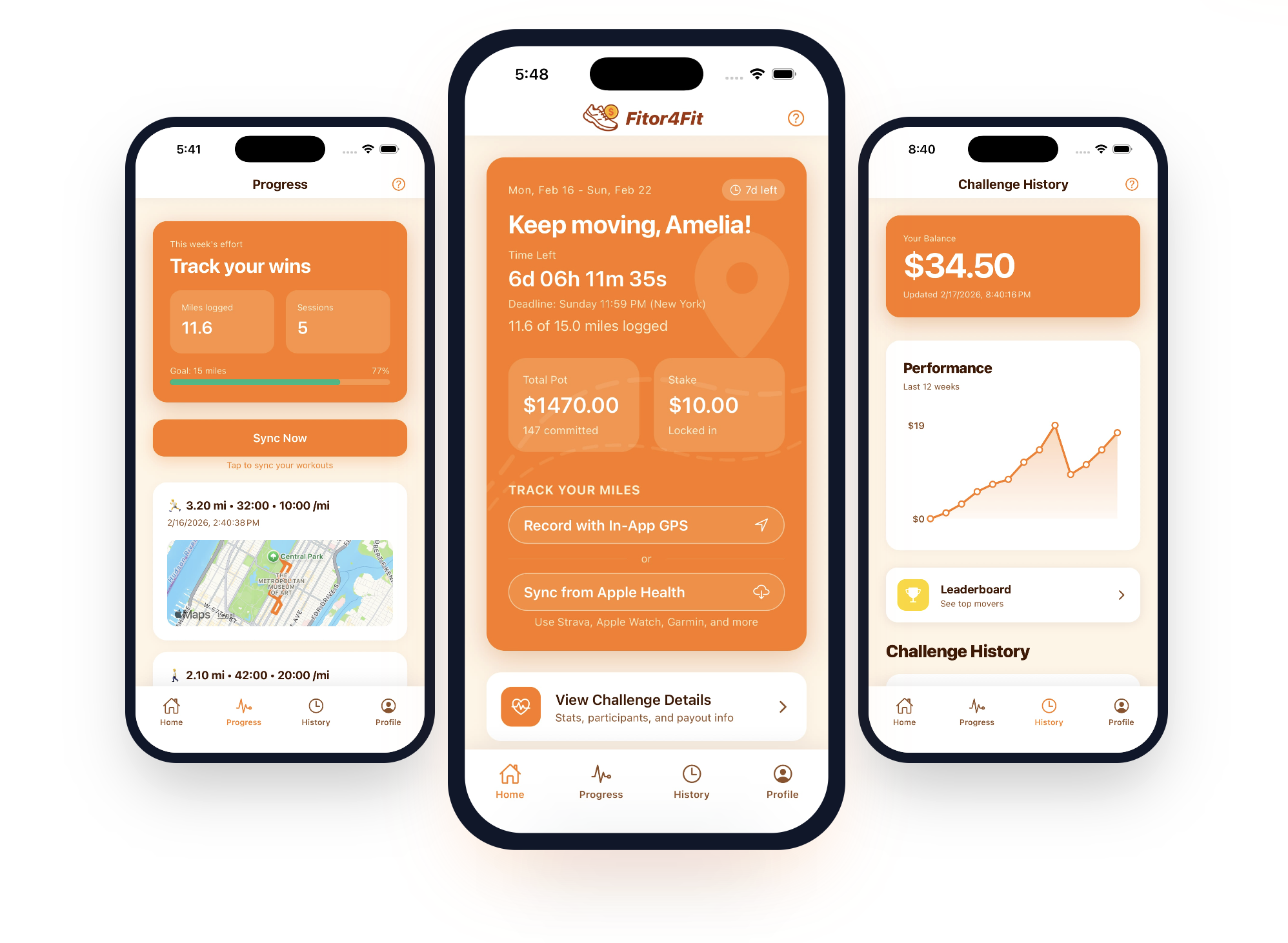
This is the latest experiment. It's a fitness accountability app where users commit to miles per week and put $10 on the line. If they hit their goal, they win a share of the pot; if they don't, they lose $10. I've gamified it by allowing users to adjust their committed mileage each week. Everyone gets a share of the pot, but the more miles you commit to, the bigger your share if you hit your goal. It's a simple game, but it adds a layer of strategy and accountability that I think is really compelling. Users have to balance their confidence in hitting their goal with the potential reward, and it creates a sense of excitement around their workouts. It's still early days, but I'm excited to see how users engage with it and what kind of strategies they come up with.